What Is Sarva Pitru Amavasya and Why Does It Matter?
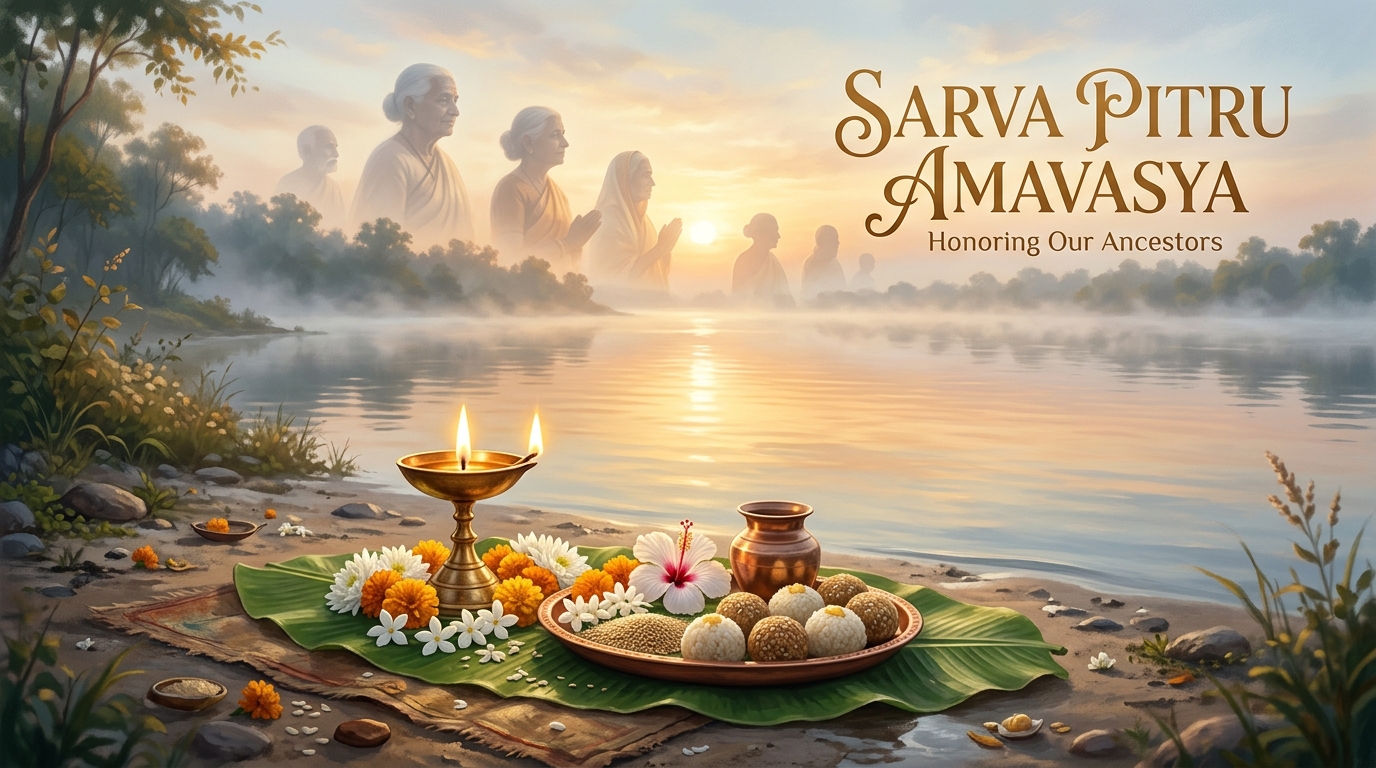
Sarva Pitru Amavasya is the final and most significant day of the sixteen-day Pitru Paksha period. It falls on Ashwin Krishna Amavasya and is dedicated to all ancestors — especially those whose exact death tithi no one in the family remembers. The word "sarva" means "all," and this day acts as a universal shraddha date. In 2026, it falls on Saturday, 10 October. For the exact date and tithi details, see our Sarva Pitru Amavasya festival page.
The sixteen days of Pitru Paksha, from Bhadrapada Purnima to Ashwin Amavasya, each correspond to a specific tithi. If an ancestor passed away on Chaturthi, their shraddha is performed on Chaturthi of the Krishna Paksha. But many families have ancestors who lived generations ago — great-great-grandparents, forgotten uncles, those who died in distant lands — whose death tithi is simply lost. Sarva Pitru Amavasya exists precisely for them. It is a day of completeness, ensuring no ancestor is left without remembrance.
This day is also called Mahalaya Amavasya. In Bengal, it marks the beginning of Devi Paksha and the countdown to Durga Puja. Across most of India, however, it is observed as the culmination of the fortnight of the ancestors. Those who could not perform shraddha on any earlier tithi during Pitru Paksha may also perform it on this day as a catch-all observance.
What Is the Date and Tithi for Sarva Pitru Amavasya 2026?
Sarva Pitru Amavasya 2026 falls on Saturday, 10 October 2026, on the tithi of Ashwin Krishna Amavasya. The tithi is determined at sunrise as per the traditional Panchang rule. This is the last day of Pitru Paksha, and all shraddha and tarpan rites should ideally be completed by this date. For daily tithi tracking, consult our Panchang & Muhurat tool.
| Year | Date | Weekday | Tithi Position |
|---|---|---|---|
| 2026 | 10 October 2026 | Saturday | Ashwin Krishna Amavasya |
| 2027 | 30 September 2027 | Thursday | Ashwin Krishna Amavasya |
| 2028 | 18 September 2028 | Monday | Ashwin Krishna Amavasya |
Note that in 2026 the day falls on a Saturday, which is ruled by Shani (Saturn). Saturn is considered the karaka of longevity and karmic debts, making a Saturday observance particularly aligned with the spirit of ancestral rites. Many families consider Saturday shraddha especially potent for clearing unresolved ancestral obligations.
What Is the Muhurat for Shraddha on Sarva Pitru Amavasya 2026?
The traditional muhurat for performing shraddha is during Kutupa Kala and Rohina Kala, which together span roughly from mid-morning to early afternoon — approximately the second and third quarters of the daytime. The exact window depends on your city's sunrise and sunset. The tithi is determined at sunrise, so the rites should be performed while the Amavasya tithi is active during the day.
As a general guideline, most Panchang authorities recommend completing the shraddha ritual between approximately 11:30 AM and 1:30 PM local time. This is the period when the Sun is near its zenith, considered the most auspicious window for ancestral offerings. Tarpan (water offering) can be performed slightly earlier in the morning after the daily bath and sankalpa. Feeding Brahmins and offering food to the needy should ideally happen after the pind daan is complete.
If you are unable to perform the full ritual during Kutupa Kala, the Aparahna Kala (afternoon period) is an acceptable alternative. Avoid performing shraddha after sunset, as the evening and night are not considered appropriate for these rites.
What Is the Shraddha Vidhi for Sarva Pitru Amavasya?
The shraddha vidhi (ritual procedure) for Sarva Pitru Amavasya follows the standard Parvana Shraddha format but with the unique feature that it addresses all ancestors collectively. Here is a step-by-step outline of the traditional procedure, which families may adapt based on regional customs and the guidance of their family purohit.
1. Sankalpa (Resolve): After bathing and wearing clean clothes, the performer faces south and takes a formal sankalpa, declaring the intention to perform shraddha for all known and unknown ancestors on the tithi of Ashwin Krishna Amavasya.
2. Invocation of Pitru: The Pitru devatas are invoked. Kusha grass is placed on the ground, and the ancestors are invited to accept the offerings. Three generations of paternal ancestors (father, grandfather, great-grandfather) and their wives are traditionally named. On Sarva Pitru Amavasya, a general invocation for all forgotten ancestors is added.
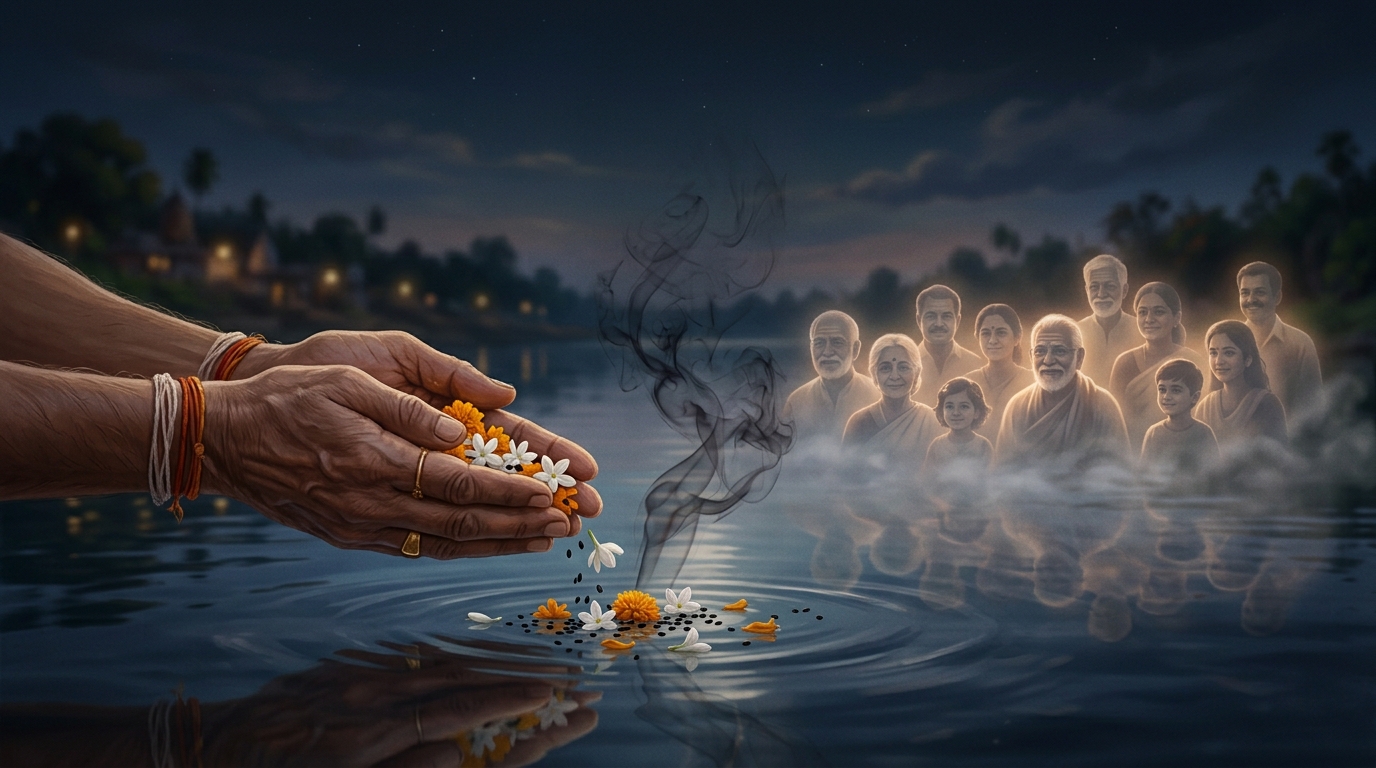
3. Tarpan (Water Offering): Water mixed with black sesame seeds (til), barley (jau), and kusha grass is offered while reciting the names of the ancestors. The water is poured from the right hand using the pitru tirtha (the base of the thumb and index finger). Three rounds of tarpan are offered for each ancestor.
4. Pind Daan: Small balls (pindas) made of cooked rice, barley flour, black sesame, honey, and ghee are placed on kusha grass or banana leaves. These represent the physical nourishment offered to the departed souls.
5. Brahmin Bhojan: Feeding Brahmins is considered an essential part of the shraddha. The food offered to the Brahmins is believed to reach the ancestors. A simple, sattvic meal without onion, garlic, or masoor dal is prepared.
6. Offering to Crows, Cows, and Dogs: A portion of the cooked food is set aside for crows (considered messengers of Yama), cows, and dogs. This act of sharing with other beings is integral to the rite.
7. Dakshina and Conclusion: Dakshina is offered to the Brahmins, and the performer seeks their blessings. The ritual concludes with a prayer asking the ancestors for their grace and forgiveness for any errors in the procedure.
What Is the Karna Katha Behind Pitru Paksha?
The origin story of Pitru Paksha is rooted in the Mahabharata and centres on Karna — the great warrior and legendary giver. This katha explains why sixteen days are set aside for ancestral rites and why the final day, Sarva Pitru Amavasya, exists for those whose lineage is unknown. The story unfolds in seven stages.
Birth and Abandonment
Kunti was unmarried when the sage Durvasa gave her a mantra: invoke any god, and he would grant her a son. She called upon the Sun, half in curiosity, and a boy was born wearing divine armour and earrings fused to his body — invulnerable from birth. Terrified of social shame, Kunti placed the infant in a basket and set it adrift on the river. The basket reached Adhiratha, a charioteer of Hastinapura, whose wife Radha raised the child. He became known as Radheya, and all his life he was dismissed as "the charioteer's son." He never knew his mother, his father, or his ancestors.
The Vow of Giving
Karna's personal rule was absolute: after his midday offering to the Sun, he would refuse nothing to anyone who asked. Everyone knew this — including Indra. Before the war at Kurukshetra, Indra disguised himself as a Brahmin and arrived at that precise hour to ask for the armour and earrings, the very things that made Karna impossible to defeat. The Sun had already warned Karna in a dream. He knew it was a trick. He cut the armour and earrings from his own flesh and gave them anyway. Shamed, Indra offered in return the Vasavi Shakti, a weapon that could be used only once. The title Daanveer — hero of generosity — was earned through such acts.
Gold, Never Food
Throughout his life, Karna gave gold, jewels, land, and cows. No one who approached him left empty-handed. But there was one gift he never made: food and water in the name of his ancestors. No tarpan, no pind, no shraddha. Not because he was miserly — but because he did not know whose son he was. He could not pour water in anyone's name because he did not know the name. Even if he had adopted Adhiratha's lineage, it was not truly his.
The Truth, Too Late
Just before the great war, Krishna revealed the truth, and then Kunti herself confirmed it: Karna was the son of Surya and the eldest of the Pandava brothers. Karna promised Kunti he would spare all her sons except Arjuna — she would keep five, regardless of who survived. But he refused to leave Duryodhana, the one man who had given him dignity when the world mocked him. On the seventeenth day of battle, his chariot wheel sank into the earth, and Arjuna's arrow ended his life.
The Plate in Heaven
After death, Karna reached heaven. A plate was set before him — but it held no food. It was filled with gold, jewels, and ornaments. He was hungry, and all he could see was exactly what he had spent his life giving others. Day after day, the same plate. He asked: "I gave everything all my life. Why can I not get a single handful of rice?"
The Answer
The answer came — from Indra in one telling, from Yama in another: "What you gave is what has returned to you. You gave gold, so you received gold. But food and water in the name of your ancestors — you never gave that. Not to your pitru, not to any hungry person in their name. What was never given cannot appear here." Karna replied: "I did not know who my ancestors were. I learned whose son I was only one day before the war."
The Sixteen Days
Moved by this, he was granted permission to return to earth — fifteen days in one telling, sixteen in another — to complete what had been left undone. Karna returned. He performed tarpan in his ancestors' names, offered pind daan, distributed food, and fed the hungry and the Brahmins. For sixteen days he did what he had never done in life. Then he returned to heaven, and this time there was food on his plate.
Those sixteen days — from Bhadrapada Purnima to Ashwin Amavasya — became Pitru Paksha, also called Mahalaya. The point of the story is not punishment. It is that even the one who never gave — and that too unknowingly — was given the chance to return and complete the offering. This fortnight is that same chance, every year. And the last day, Sarva Pitru Amavasya, is for all those whose tithi no one remembers — just like Karna, who did not even know his ancestors' names.
What Does Each Day of Pitru Paksha Mean?
Each of the sixteen days of Pitru Paksha corresponds to a specific tithi of the Krishna Paksha. The shraddha for an ancestor is traditionally performed on the tithi that matches their date of death. Below is a summary of the significance of each day.
| Day / Tithi | Shraddha For |
|---|---|
| Purnima (Day 1) | Those who died on a Purnima tithi |
| Pratipada (Day 2) | Those who died on Pratipada |
| Dwitiya (Day 3) | Those who died on Dwitiya |
| Tritiya (Day 4) | Those who died on Tritiya; also for married women (Saubhagya Shraddha) |
| Chaturthi (Day 5) | Those who died on Chaturthi (considered inauspicious by some; often combined with Panchami) |
| Panchami (Day 6) | Those who died on Panchami |
| Shashthi (Day 7) | Those who died on Shashthi |
| Saptami (Day 8) | Those who died on Saptami |
| Ashtami (Day 9) | Those who died on Ashtami; also for maternal ancestors |
| Navami (Day 10) | Navami Shraddha — for married women who passed away (Avidhava Navami) |
| Dashami (Day 11) | Those who died on Dashami |
| Ekadashi (Day 12) | Those who died on Ekadashi; for ascetics and sannyasis |
| Dwadashi (Day 13) | Those who died on Dwadashi; for children and sannyasis |
| Trayodashi (Day 14) | Those who died on Trayodashi; also for children who died young |
| Chaturdashi (Day 15) | Those who died by accident, weapon, or sudden causes (Ghata Chaturdashi) |
| Amavasya (Day 16) | Sarva Pitru Amavasya — for ALL ancestors, especially those whose tithi is unknown |
If a family does not know the death tithi of an ancestor, or if they can only perform shraddha on one day during the entire fortnight, Sarva Pitru Amavasya is the recommended day. It covers everyone.
What Should You Avoid During Pitru Paksha?
During the sixteen days of Pitru Paksha, tradition recommends avoiding certain activities. These are not rigid rules but widely followed customs meant to keep the focus on ancestral remembrance and inner reflection. New purchases of property, vehicles, or jewellery are generally postponed. Starting new ventures, engagements, or weddings is traditionally avoided. Non-vegetarian food and alcohol are set aside for the fortnight. Cutting of trees or major construction is also deferred by many families.
It is important to understand that Pitru Paksha is not a period of fear or bad luck. It is a period of gratitude and remembrance. The customs around avoidance are meant to create a quieter, more reflective atmosphere — not to generate anxiety. Many families simply observe the shraddha on the relevant tithi and continue their daily lives with a spirit of mindfulness.
How Does Sarva Pitru Amavasya Connect to Other Amavasya Observances?
Amavasya (the new moon day) holds special significance across the Hindu calendar. While Sarva Pitru Amavasya is specifically dedicated to ancestral rites, other Amavasya observances carry their own themes. Mauni Amavasya in Magha month is associated with silent vows and holy bathing. Vat Savitri Amavasya in Jyeshtha is observed by married women for the well-being of their spouses. Each Amavasya has its own character, but the thread connecting them all is the idea of turning inward — towards reflection, gratitude, and spiritual practice.
Sarva Pitru Amavasya stands apart because it is the only Amavasya that explicitly addresses the debt to ancestors (Pitru Rina). In Vedic thought, every person is born with three debts: to the gods (Deva Rina), to the sages (Rishi Rina), and to the ancestors (Pitru Rina). Shraddha and tarpan on this day are considered among the most direct ways to honour the third debt.
What Are Practical Tips for Observing Sarva Pitru Amavasya 2026?
For families observing this day in 2026, here are some practical suggestions that honour the spirit of the tradition without requiring elaborate arrangements. These tips may be especially helpful for those living in cities or away from their ancestral homes.
If you cannot perform a full shraddha: A simple tarpan with water, black sesame seeds, and kusha grass, offered while facing south, is a meaningful observance. Recite the names of your known ancestors and add a general prayer for all unknown forebears.
If you do not know your ancestors' names: This is exactly what Sarva Pitru Amavasya is for. Use a general sankalpa addressing "all my ancestors, known and unknown, on both maternal and paternal sides."
Feed someone: The Karna katha makes it clear — the essence of shraddha is feeding others in the name of your ancestors. Donating food to the needy, offering a meal to someone hungry, or contributing to a community kitchen are all deeply aligned with the spirit of this day.
Donate sesame and grain: Black sesame (til), rice, and barley are traditionally associated with Pitru rites. Donating these items is considered meritorious.
Remember with gratitude: At its heart, Pitru Paksha is about remembrance. Even if no ritual is possible, sitting quietly and thinking of your grandparents, parents, and those who came before — acknowledging that you exist because they did — is a form of honouring the ancestors that requires nothing but sincerity.
Sarva Pitru Amavasya 2026 on Saturday, 10 October offers every family the chance to complete what may have been left undone — just as Karna was given his sixteen days. Whether through elaborate ritual or a simple glass of water poured with love, the ancestors are remembered, and the circle is made whole.